




Cabspotting
2009-05-25 11:57:07 - by
Antoine Berlon
Cabspotting traces San Francisco’s taxi cabs as they travel throughout the Bay Area. The patterns traced by each cab create a living and always-changing map of city life. This map hints at economic, social, and cultural trends that are otherwise invisible. The Exploratorium has invited artists and researchers to use this information to reveal these “Invisible Dynamics.”
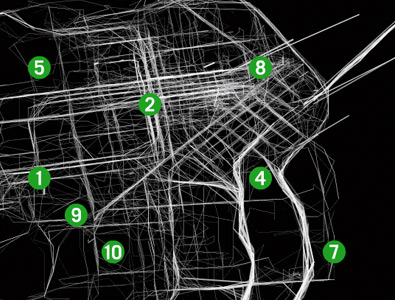
The core of this project is the Cab Tracker. The Tracker averages the last four hours of cab routes into a ghostly image, and then draws the routes of ten in-progress cab rides over it.
The Time Lapse area of the project reveals time-varying patterns such as rush hour, traffic jams, holidays and unusual events. New projects are produced by the Exploratorium’s visiting artists and also created by the larger Cabspotting community.
Sources : cabspotting.org
La limite comme chemin
2009-04-15 09:54:00 - by
Antoine Berlon
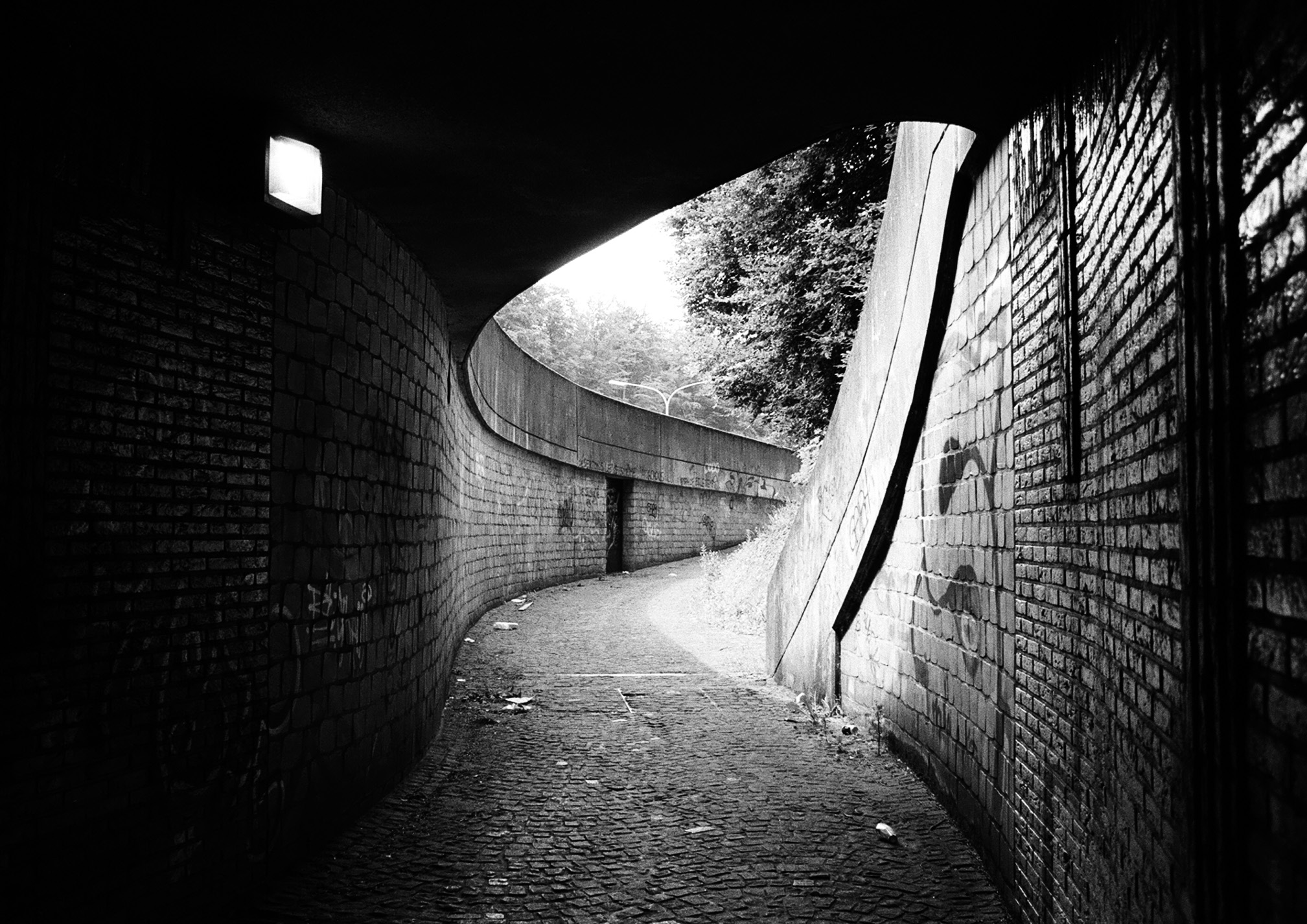
La limite comme chemin rend compte d’un acte simple : deux habitants de Bruxelles marchent pendant quatre jours au plus près de la limite de leur ville-région. Un geste poétique qui, sur une ligne tracée, invente son espace et ses passages, ses bords et ses liens.
La limite comme chemin
Quatre jours de marche sur le fil d’une entité régionale est un acte inutile. Il se mue en geste poétique pour celui qui le fait. Et pour cet acte ou ce geste, Florence m’accompagne. Nous sommes donc deux, en pensées solitaires et partagées, sur le même chemin ouvert par la
limite entre territoires.
La ligne est tracée, mais le mouvement invente son espace, embrasse les séquences hétérogènes et les passages diffus. Marchant du Sud, vers l’Est, le Nord, puis l’Ouest, notre gauche se tourne vers l’intérieur d’une poche, notre droite vers le territoire qui l’entoure. Une gauche et une droite d’un corps impossible à diviser, mais poreux. Semblable à la frontière qui sépare des entités autant qu’elle réunit ses bords.
La ligne est théorique, administrative. Sur le terrain, elle vit de topographies diverses, de langues, d’histoires et d’usages multiples qui irriguent chacune des parties. Bien sûr, les petites vallées ont deux versants, mais l’eau n’appartient à personne ; la route a deux côtés, mais les maisons se regardent.
Certains bords sont plus marqués que d’autres, subissant la poussée du centre qui rejette au plus loin les cimetières et de nombreuses cités de logements.
Pourtant, entre ces petites concentrations bâties, les quelques axes bien définis et la surabondance des nominations territoriales qui marquent la limite, l’épaisseur de la ligne s’effiloche dans de multiples chemins de traverse, coulées bucoliques, bouts de campagne, terrains vagues, zones d’avenir incertain, potagers partagés, grands morceaux de la forêt et petits débordements vivants. Un espace de passages
entre l’entour et la poche, qui se refait quotidiennement.
Florence Marchal et Jean-François Pirson. juillet 2008
The brains of London cab drivers
2009-01-04 19:36:57 - by
Nicolas Malevé
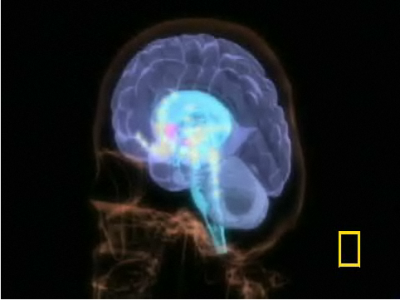
«In a study that generated considerable media interest (and won her an Ig Nobel Prize), in 2000 Dr Eleanor Maguire scanned the brains of 16 London black-cab drivers, who had spent an average of two years learning ’the Knowledge’ – street names and routes in London. The taxi drivers had a larger right hippocampus than control subjects, and the longer they had been on the job, the larger their hippocampus was. These findings seem to indicate that the right hippocampus plays an important role in storing spatial memories.
[...]
"When we travel down a route we are familiar with, we often can’t see our destination. Instead, we have an image of it in our mind, and a mental map of how to get there. But this mental map is very different from a street map. I’m trying to understand how we create internal three-dimensional representation of space and our position within it."
She is also interested in another form of memory, linked to spatial memory, which appears to be mediated by the left, rather than the right hippocampus. "Having created an internal representation of large-scale space, how do we structure episodic memories – particular events and personal experiences that occurred at a specific time and place – within that environment?" »
Read more or watch the video on the National Geographic website
